Camping Safety Tips for Women Camping Alone
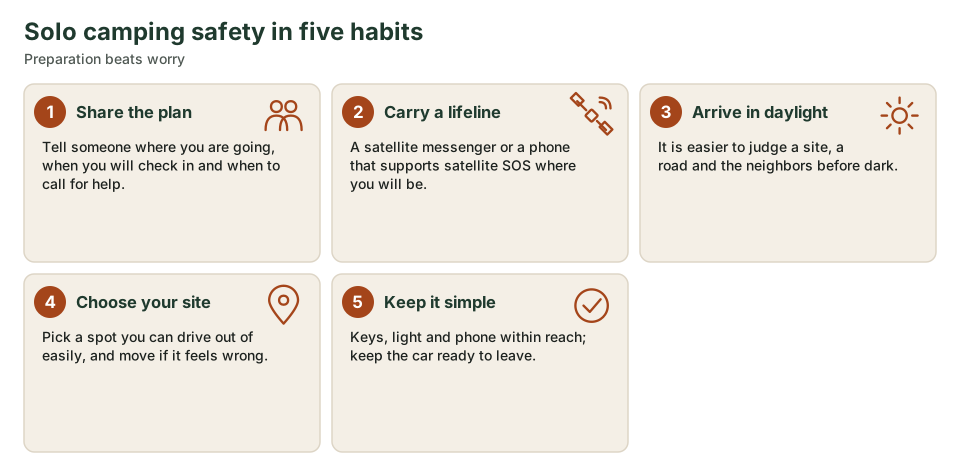
Most solo camping risks are the same for everyone: weather, roads, navigation and injury. A trip plan, a reliable way to call for help and choosing a site you feel good about make the biggest difference.
🖨 Print this how-to One-page checklist, no ads.
Quick answer: Leave a detailed trip plan, carry a way to call for help without cell service, arrive in daylight when you can, pick a site that feels right and trust your instincts if a place or person feels wrong. You can always leave.
Solo camping can be relaxing and confidence-building. Safety is mostly preparation.
Make the plan someone else holds
A good trip plan includes your route, the campsite or area, your vehicle, when you expect to have signal and the time someone should call for help. Use our trip plan guide. The point is to have a person who knows when to act, not to share your location with strangers online.
Communication without cell service
Many campsites have no signal. A two-way satellite messenger, a PLB or a compatible iPhone with Emergency SOS via satellite can reach help. Learn how it works before you need it.
Choosing and leaving a site
Arrive early enough to look around. Choose a spot where you can turn around and drive out. If a site feels wrong, because of a person, a road or the weather, leave and go somewhere else. That is not overreacting; it is good camping judgment.
Weather and the basics
Most real emergencies are weather, vehicle trouble or injuries. Check the National Weather Service forecast, carry water and a first-aid kit and know the road. Keep keys, a light and your phone in the same place every night.
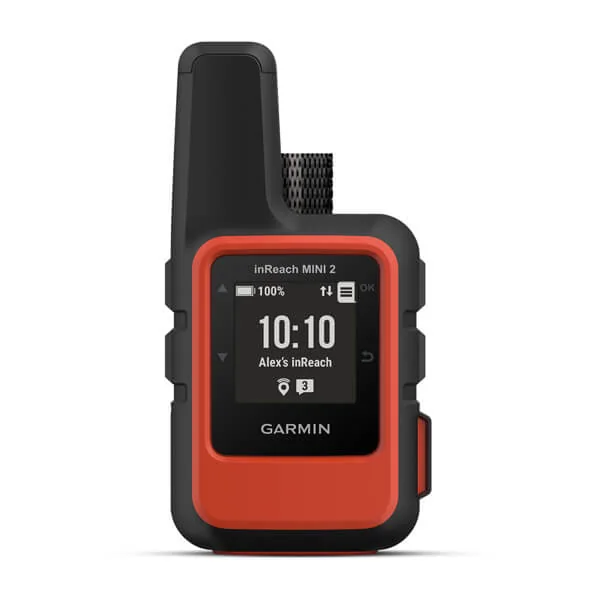
Garmin inReach Mini 2
A pocket satellite communicator for two-way messaging, location sharing and interactive SOS where there's no cell service.
- Messaging
- Two-way text via satellite
- Emergency
- Interactive SOS
- Navigation
- TracBack routing, digital compass
- Service
- Active satellite subscription required
Printable checklist: solo camping
- Trip plan left with a trusted person, with a call-for-help time
- Satellite messenger or satellite SOS phone set up and tested
- Arrive in daylight when possible
- Site chosen with an easy exit
- Keys, light, phone and water within reach overnight
- Weather forecast checked
Frequently asked questions
Is dispersed camping safe for a woman alone?
Many women camp solo safely. The main risks are often weather, roads and injuries. Planning, communication and choosing your site well reduce them.
Should I post my location on social media?
It is safer to share live location only with people you trust, and post photos after you have left.
What if someone makes me uncomfortable?
Leave. You do not need to explain. Drive to a busier place or a developed campground.