How to Keep a Rooftop Tent Dry and Warm
Condensation, wind-driven rain and a cold platform are the usual comfort problems in a rooftop tent. Here's how to vent, pad and cover the tent, and what to do when the weather wins.
🖨 Print this how-to One-page checklist, no ads.
Quick answer: Vent even on cold nights, keep wet gear out of the sleeping area, use a pad with enough R-value for the platform and park out of the worst wind. Dry the tent before you pack it when you can.
A rooftop tent is a small fabric room over metal. It will collect moisture if you seal it up.
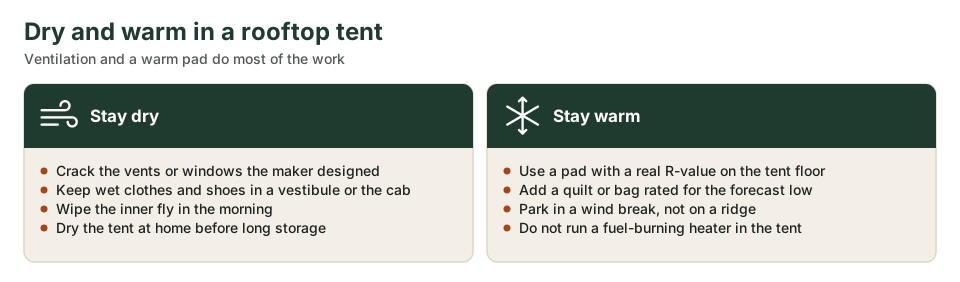
Condensation is normal
You breathe out moisture all night. In a small tent it lands on the fly and the ceiling. Use the vents the manufacturer built, even when it is cold, and keep wet layers out of the sleeping space. In the morning, wipe the inner surface and open the tent if the weather allows.
The floor is a radiator
The tent floor sits above metal and moving air, so it can sleep colder than a ground tent on duff. A sleeping pad with a published R-value, sized for the forecast, matters more than a thick comforter on top. The National Weather Service's cold-weather safety guidance is a reminder to treat low temperatures seriously, not as a gear-testing game.
Rain and packing
Park so the door is out of the driving rain if you can. Use the cover when the tent is packed, and dry it at home if you had to pack it wet; a wet tent can mildew in a day. Do not run a fuel-burning heater inside a rooftop tent.
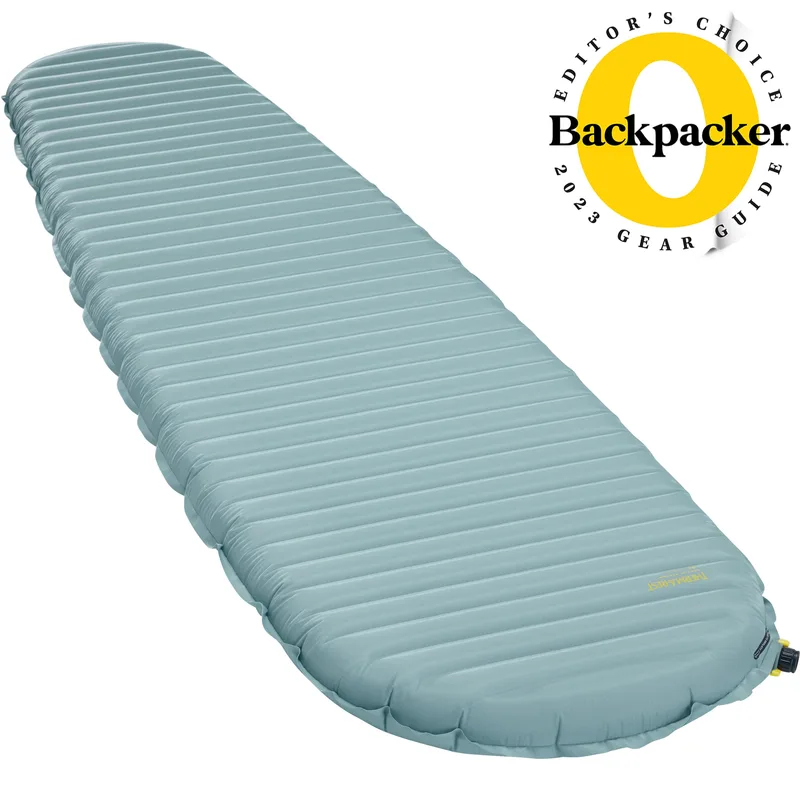
Therm-a-Rest NeoAir XTherm NXT Sleeping Pad
A 3-inch air pad with an ASTM-tested R-value of 7.3 for cold ground and winter camping.
- R-value
- 7.3 (ASTM F3340)
- Thickness
- 3 in (7.6 cm)
- Regular size
- 20 x 72 in, 15.5 oz (440 g)
- Regular Wide
- 25 x 72 in, 1 lb 3 oz
- Valve
- WingLock
Printable checklist: dry and warm
- Vents cracked; wet gear in the vestibule or cab
- Pad R-value matches the forecast low
- Bag or quilt rated for the night
- Parking brake set, wheels chocked
- Morning wipe-down; tent dried before storage
Frequently asked questions
Why is the ceiling wet if it did not rain?
That is usually condensation, not a leak. Add ventilation and wipe it down.
Can I use an electric blanket?
Only if you have the battery budget and a safe, listed 12 V product. A better pad is the more reliable fix.
Should I put a tarp over the tent?
Only if the tent maker allows it and it does not rub the fly in the wind. Many leaks are really condensation or a door left poorly closed.