Rooftop Tent Weight Limits: Vehicle, Rack and Occupied Load
The number that matters is the lowest of the vehicle's roof rating, the rack's rating and the tent maker's limit, including the people inside. Dynamic (driving) and static (parked) ratings are not the same.
🖨 Print this how-to One-page checklist, no ads.
Quick answer: Read three numbers: the vehicle's roof-load rating in the owner's manual, the rack's dynamic rating and the tent's rated occupied weight. Never exceed the lowest one. A tent that is legal parked can still be too heavy to drive with.
Roof-load figures are often much lower than people expect, especially on cars and crossovers.
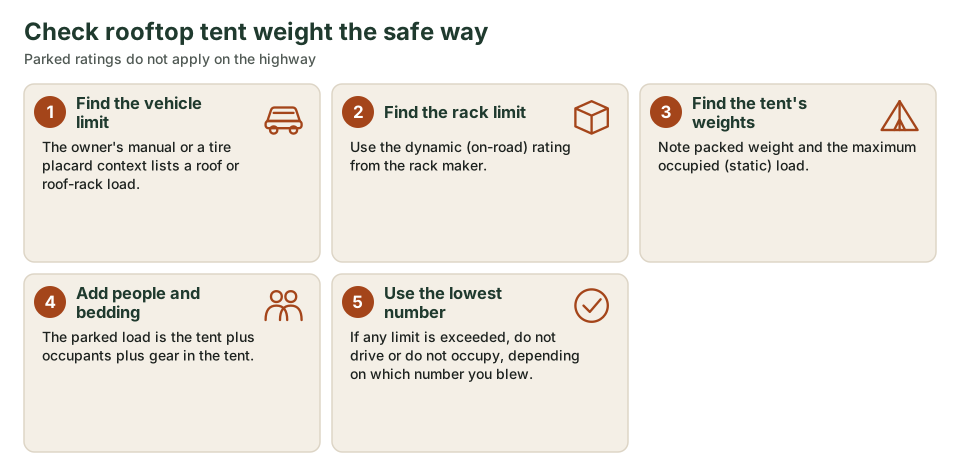
Dynamic versus static
Dynamic ratings apply while you drive: wind, bumps and braking all add force. Static ratings apply when you are parked and people are in the tent. Rack and tent makers usually publish both, and the driving number is lower. A tent can be within the static limit with two adults and still be over the dynamic limit of a small car's roof.
Where to find the vehicle number
Look in the owner's manual for roof load, roof-rack load or "maximum permitted load on the roof." Some vehicles quote a number with the factory rails, and a lower number without them. If the manual is silent or the figure is tiny, a rooftop tent may not be the right setup for that vehicle.
Racks, crossbars and tents
A quality rack (Thule and other makers publish load charts) is only as strong as its weakest part: towers, bars, mounting points and the tent's own brackets. After you install, torque the hardware to the specified values and recheck after the first drive.
Do not guess with people in the tent
Stay at or under the tent maker's occupied-weight rating. That rating assumes a parked, level vehicle. See how to level a truck camper or rooftop tent.
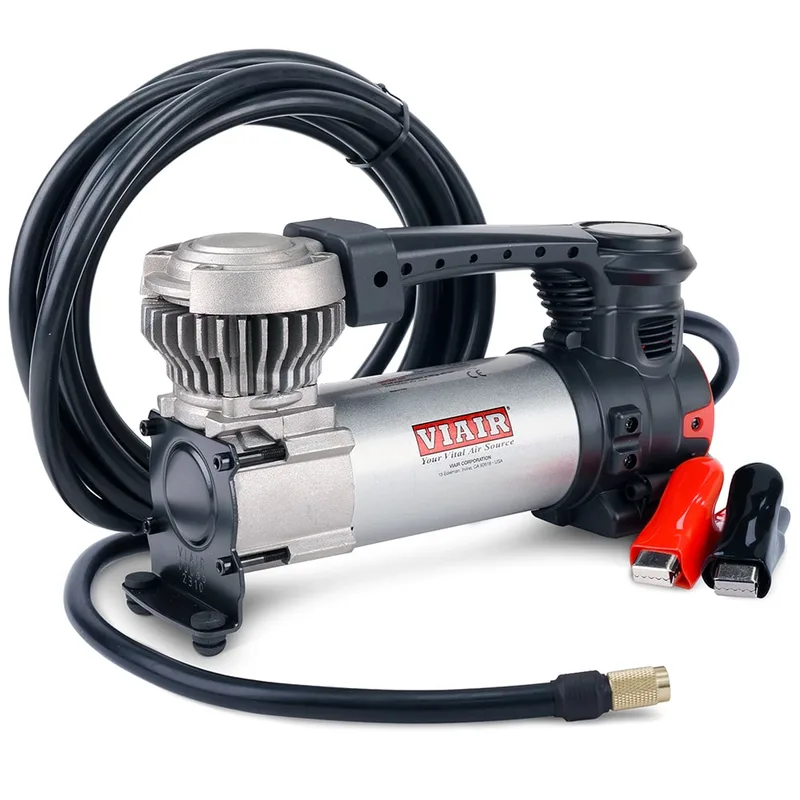
VIAIR 88P Portable Compressor
A compact 12 V clamp-on tire inflator rated for tires up to 33 in, popular for airing back up after dirt roads.
- Airflow
- 1.97 CFM at 0 PSI
- Duty cycle
- 25 min at 30 PSI
- Max working pressure
- 120 PSI
- Max amp draw
- 20 A (battery clamps)
- Size / weight
- 9.8 x 3.2 x 5.6 in, 4.75 lb
- Tires
- Up to 33 in
Printable checklist: roof-load limits
- Vehicle roof-load figure copied from the owner's manual
- Rack dynamic rating from the maker
- Tent packed weight and occupied (static) rating
- Occupied load (people + bedding) at or under the static limit
- Driving load (tent + cover + cargo on the rack) at or under the lowest dynamic limit
Frequently asked questions
Can I put a rooftop tent on any SUV?
No. Many crossovers have a low roof rating. Check the manual before you buy.
Does a pop-up camper on a truck use the same math?
A slide-in truck camper is limited by payload and hitch or camper-center ratings, not the roof rack. Weigh the loaded truck at a scale.
What if two ratings disagree?
Obey the lowest one.