Water and Food for a 5-Night Truck Camper Trip
How much fresh water to carry, how to budget gray water, and a simple food plan that does not depend on a hookup. Plus where to fill and dump on a short off-grid loop.
🖨 Print this how-to One-page checklist, no ads.
Quick answer: Plan drinking and cooking water first, then washing water, and make sure your gray and black tanks can hold what you will produce for five nights. Carry a reserve, know your fill and dump points and pack food that does not need a full-size fridge if yours is small.
A truck camper is at its best when the tanks and the cooler match the length of the trip.
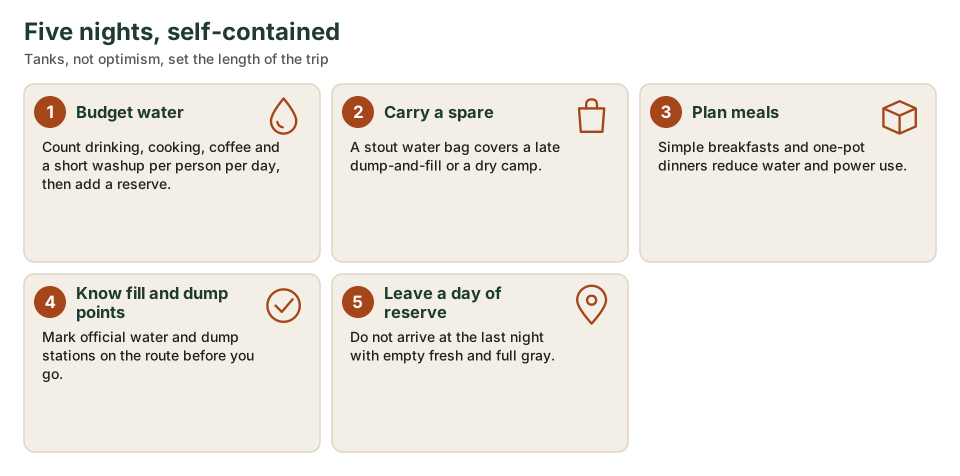
Water first
How much you use varies widely, but the idea is the same: write a daily number for drinking, cooking and washing, multiply by people and nights, then add a reserve. The EPA's WaterSense program notes that indoor use at home is much higher than camp use, so do not copy your household figure. Short navy showers, a basin for dishes and no wasted pre-rinsing go a long way. A bag such as an MSR Dromedary gives you a backup if the tank runs low.
Gray and black tanks
Every gallon you use has to go somewhere. If the gray tank is smaller than five nights of washing, you need a dump in the middle or stricter water use. Never dump tanks on public land or in a parking lot. Use a listed dump station. Pack out toilet waste if you are using a portable toilet; see Leave No Trace's "dispose of waste properly" guidance.
Food for a short trip
Favor meals that cook in one pot and keep well in a 12 V fridge or a quality cooler. Pre-chop at home. Keep a no-cook backup for a windy or fire-restricted night. If you camp in bear country, store food as the land manager requires, not on the picnic table.
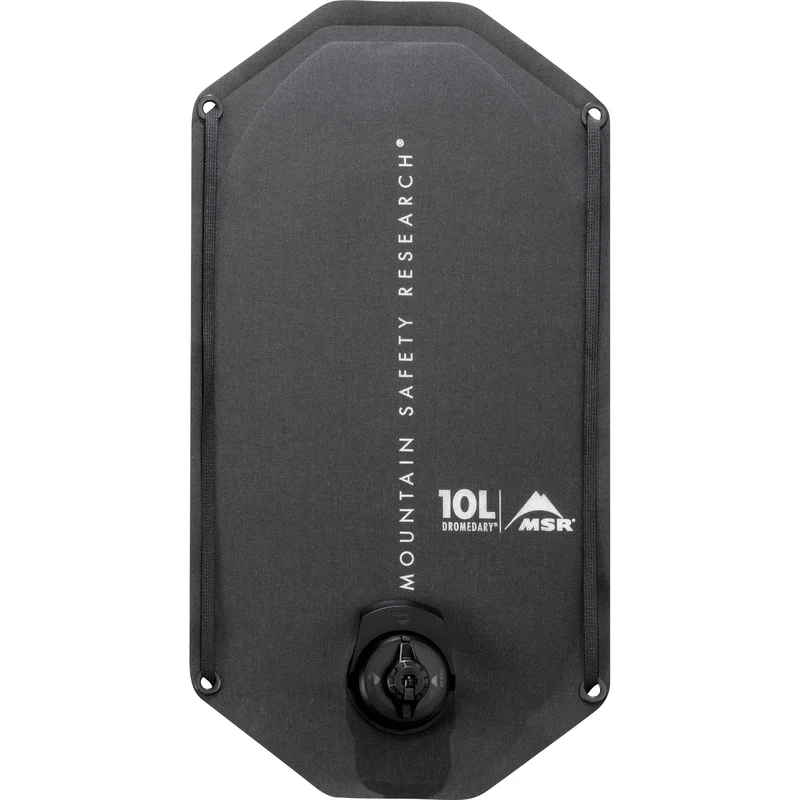
MSR Dromedary Bag
A collapsible 1,000-denier water bag in 4, 6 and 10 L sizes with a 3-in-1 cap for filling, drinking and pouring.
Pros
- Tough 1,000D fabric with a BPA-free food-grade lining
- Rolls flat when empty
- Perimeter webbing for carrying or hanging as a camp tap
Cons
- Heavier than thin-film bladders
- No built-in hose or shower attachment
- Sizes
- 4 L, 6 L, 10 L
- Weight
- 6.9 oz (4 L), 8.7 oz (6 L), 10 oz (10 L)
- 10 L size
- 12.5 x 23 in
- Fabric
- 1,000D with polyurethane lining
- Cap
- 3-in-1: fill, drink, pour
- Made in
- USA
Printable checklist: five-night provisions
- Daily water budget written down, times five, plus a reserve
- Spare water bag filled
- Gray and black tank capacity checked against the budget
- Fill and dump locations marked
- Meals planned, including one no-cook dinner
- Trash and food-storage plan matches the land rules
Frequently asked questions
How many gallons per person per day do I need?
It depends on cooking and washing habits. Start by measuring a weekend at home in camp mode, then add a reserve, rather than copying someone else's number.
Can I wash dishes on the ground?
No. Strain food scraps into the trash and put wash water in the gray tank, or pack it out where required.
What if fire restrictions ban the stove I wanted to use?
Carry a backup fuel or a no-cook plan. Check current restrictions before you go.