What to Do If You Get Lost or Stranded While Camping
Stop, stay calm and make it easy for rescuers to find you. In most vehicle-based emergencies, the safest choice is to stay with the vehicle, conserve water and use every way you have to call for help.
🖨 Print this how-to One-page checklist, no ads.
Quick answer: Stop moving, assess injuries and supplies, try to call or text for help and stay with your vehicle unless you are sure help is close and walking is safe. Make yourself visible and protect yourself from heat or cold.
A car is shelter and a large, easy target for searchers.
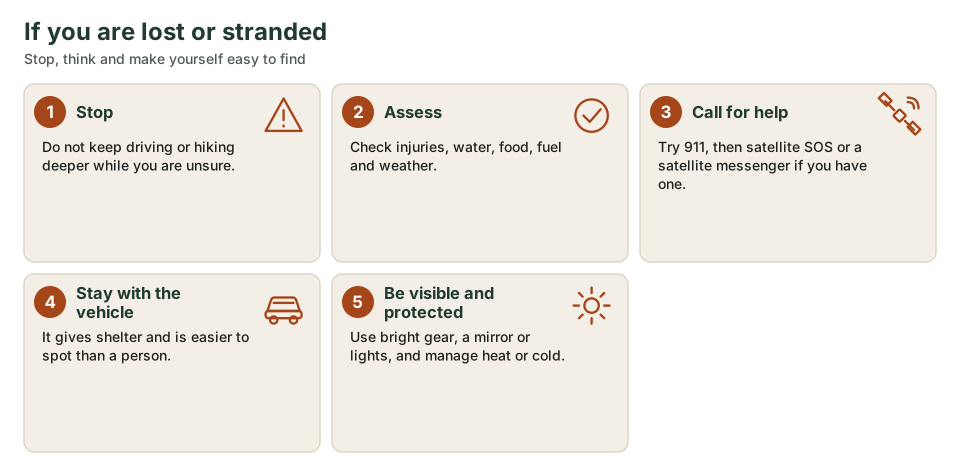
Stop and assess
When you realize you are lost or stuck, stop. Count water and food, check the weather and note the time. If someone has your trip plan, they know when to call for help.
Call for help
Try 911 even with poor signal. If you have a compatible iPhone, Emergency SOS via satellite may help when there is no cell service. A satellite messenger or PLB can also signal for help.
Stay with the vehicle
In most cases, the vehicle is the best place to wait. It offers shelter and is easier to find than a person walking. Walk only if you are sure of the route, the distance is short, the weather is safe and staying is more dangerous.
Heat, cold and signaling
In heat, stay in shade, limit exertion and ration sweat, not water. In cold, add layers and stay out of the wind. Use bright items, hazard lights, a horn or a mirror to signal.
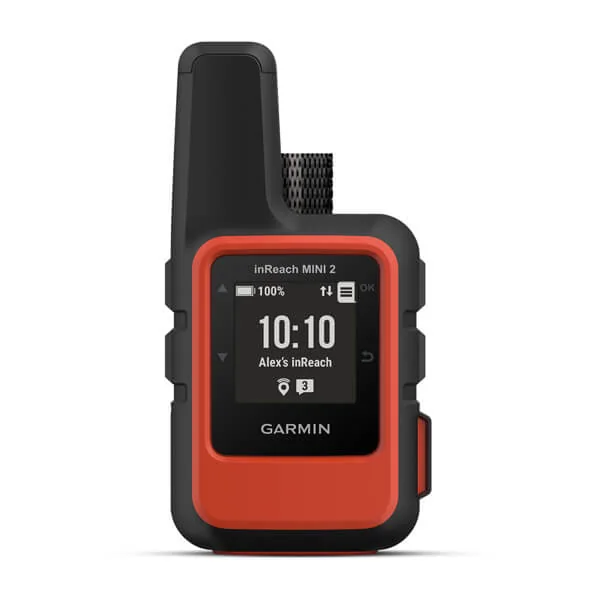
Garmin inReach Mini 2
A pocket satellite communicator for two-way messaging, location sharing and interactive SOS where there's no cell service.
- Messaging
- Two-way text via satellite
- Emergency
- Interactive SOS
- Navigation
- TracBack routing, digital compass
- Service
- Active satellite subscription required
Printable checklist: stranded
- Stop and assess injuries and supplies
- Try 911, then satellite SOS or a messenger
- Stay with the vehicle unless leaving is clearly safer
- Shade or warmth managed
- Bright items and lights ready for signaling
Frequently asked questions
Should I walk for help?
Usually not, unless help is close, the route is known and staying is more dangerous.
How much water should I carry in the desert?
Carry more than you think you need, plus a reserve for being stuck. Heat increases water needs.
What if my phone has no service?
Try 911 anyway, then use satellite tools if available. A trip plan with a deadline is your backup.