Rooftop Tent vs. Truck Camper: Which Fits a Short Off-Grid Trip?
A rooftop tent keeps the truck light and simple. A slide-in camper brings a kitchen, tanks and weather protection. Here's how to choose for 1 to 5 night trips, including payload and charging.
🖨 Print this how-to One-page checklist, no ads.
Quick answer: Choose a rooftop tent if you want a lighter, cheaper, quicker setup and you are happy to cook outside. Choose a truck camper if you want standing room, tanks and a way to wait out weather inside, and your truck has the payload for it.
Both can do a short off-grid trip well. The truck's payload, not the brochure, is the first filter for a camper.
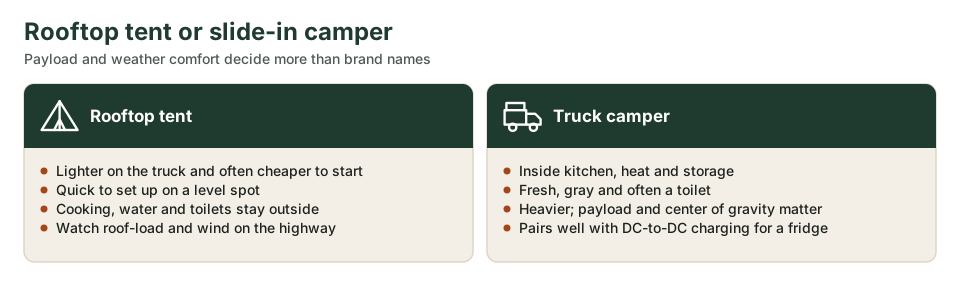
Payload first
A slide-in camper plus water, food, fuel and people can exceed a half-ton truck's payload. Read the door-jamb sticker and weigh the loaded truck. A rooftop tent plus a rack is usually lighter, but it still has to stay under the roof and rack ratings; see rooftop tent roof rack weight limits.
Weather and time of year
In fair summer weather, a rooftop tent and a tailgate kitchen are plenty for a long weekend. In shoulder season, wind, rain and bugs make a camper's indoor space worth the weight. Neither is a substitute for checking fire restrictions and road conditions.
Power and water
Campers shine when you add a house battery, a DC-to-DC charger and tanks. Tents usually pair with a power station and jugs. Plan that system on purpose; see how to plan power for a rooftop tent trip.
Driving and parking
A camper changes braking, crosswinds and garage height. A tent changes height too, and it stays up in the wind on the highway. Measure your garage, ferries and drive-throughs before you buy.
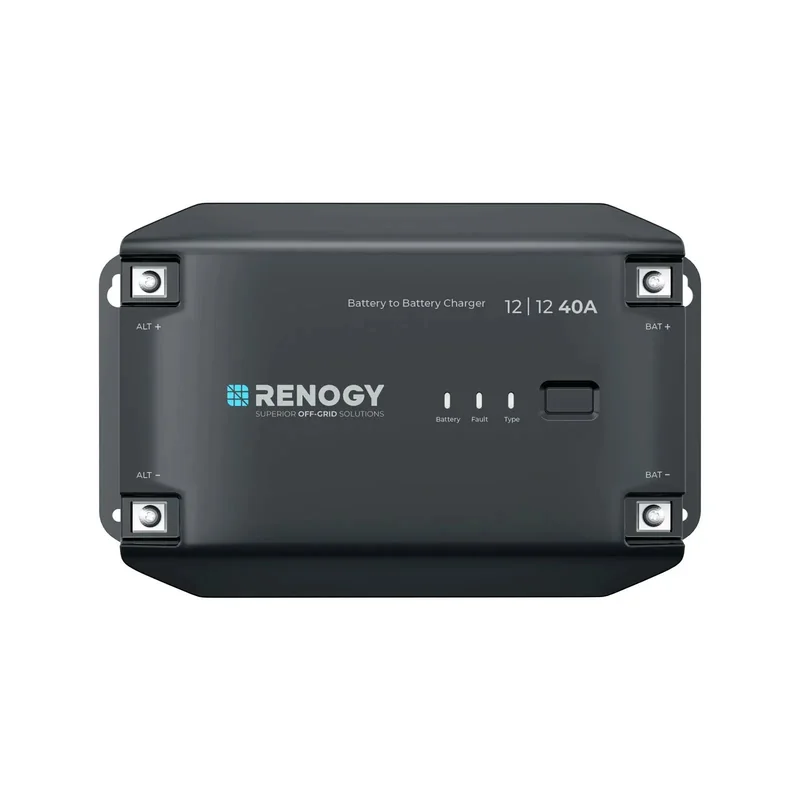
Renogy 12V 40A DC-DC Battery Charger
Charges a lithium, AGM or gel house battery from the vehicle's alternator while you drive, with alternator detection built in.
- Output
- 40 A, 12 V
- Battery types
- LiFePO4, AGM, gel, flooded
- Input
- Alternator (starter battery)
- App
- Optional, with Renogy BT-2 module (sold separately)
Printable checklist: which setup
- Truck payload and roof-load numbers written down
- Typical trip length and season
- Need for an indoor kitchen and toilet, yes or no
- Charging and water plan for that setup
- Height, storage and garage checked
Frequently asked questions
Can a rooftop tent work in winter?
Some people do it with a four-season tent and a strong pad, but condensation and roof-load (including snow) get harder. A camper or a ground tent may be more comfortable.
Is a pop-up truck camper a middle path?
Yes. It is lighter than a hard-side camper and more enclosed than a rooftop tent, still limited by payload.
Do I need four-wheel drive?
Only if the roads you use require it. Neither setup creates traction the truck does not have.